Tianjin
TianjinOspedali universitari e un centro cardiologico accreditato JCI, a mezz’ora da Pechino con il treno ad alta velocità.
Airports: Tianjin Binhai International Airport (TSN)
Best months to visit: Apr · May · Sep · Oct
Ultimo aggiornamento:
Key facts
Hospitals and clinics listed for Tianjin in the CareAtlas directory: 5. Main airports: Tianjin Binhai International Airport (TSN). Best months to visit: Apr · May · Sep · Oct.
- Province: Tianjin
- Airports: Tianjin Binhai International Airport (TSN)
- Best months to visit: Apr · May · Sep · Oct
- Hospitals listed: 5
- Treatments at listed hospitals: Controllo e pulizia dentale, Chirurgia refrattiva (SMILE / LASIK / ICL), Intervento di cataratta (impianto di lente intraoculare), Occhiali e optometria, Valutazione cardiologica … +1
- Last updated:
Pubblicato da CareAtlas · Politica editoriale
Tianjin is the quieter, cheaper neighbour of Beijing — a major port municipality of its own, with large university hospitals, a JCI-accredited cardiovascular centre, international-style private clinics, and both an airport and a cruise port on China's 240-hour visa-free transit list[2]. For international patients it works two ways: as a destination in itself, or as the calm base half an hour by train from Beijing's flagship hospitals.
Tianjin's medical landscape
The anchor of the public system is Tianjin Medical University General Hospital in Heping District, the city's main university general hospital, listed with its contacts in the National Health Commission's English directory of Tianjin hospitals[3]. The same official directory lists the other key public institutions an international patient might encounter — Tianjin First Center Hospital (which the directory lists with a dedicated foreign-department phone line), Tianjin Huanhu Hospital for neurology and head trauma, Tianjin Hospital for orthopedics, and the city's obstetrics and children's hospitals[3].
Tianjin's most distinctive institution for medical travellers sits 40 km east in the Binhai New Area: the TEDA International Cardiovascular Hospital, a specialist heart hospital that the TEDA district government describes as the first hospital in China to have earned three consecutive JCI accreditations[4]. JCI (Joint Commission International) accreditation matters to many foreign patients and insurers because it audits hospitals against international safety standards. The same government page lists TEDA Hospital (a general tertiary hospital) and the Binhai New Area Hospital of Traditional Chinese Medicine among the area's tertiary institutions[4]. For cardiac concerns, compare options via the cardiology specialty page and cardiac evaluation.
For routine and family care in an international format, the NHC directory also lists Tianjin United Family Hospital in Hexi District and Raffles Medical clinics both downtown and in TEDA[3] — useful for English-language GP visits, checkups and follow-ups, at private-sector prices.
As always: a hospital appearing in a directory tells you it exists and how to reach it, not that it offers a specific service in your language. Confirm details directly — the bilingual inquiry tool makes that easier — and browse verified profiles in the Tianjin hospital directory.
Getting there
Tianjin Binhai International Airport (TSN) has mostly regional international connections; many visitors instead fly into Beijing's two airports and take the intercity high-speed train, which covers Beijing South–Tianjin in roughly half an hour. Cruise passengers arrive at the Tianjin International Cruise Home Port in Binhai.
Both the airport and the Tianjin passenger seaport are designated entry ports for the 240-hour visa-free transit policy, with the permitted stay area being the whole Tianjin municipality[2]. As of October 2026 the policy covers nationals of 57 countries transiting to a third country or region, for stays up to 10 days with a confirmed onward ticket; tourism, business and family visits are permitted, while work and study still need visas[1]. Note that the stay area is tied to where you enter — entering at Tianjin allows movement within permitted areas across the scheme's 24 provinces, but plan your exit from a designated port and keep the 10-day limit in mind[1]. For anything treatment-focused, get a regular visa: see visa and entry.
The Beijing link deserves emphasis: intercity trains run all day, so a consultation at a Beijing national referral hospital and recovery in cheaper, calmer Tianjin — or the reverse — is a practical combination. See the Beijing city guide.
Where to stay
- Heping District is the natural base: Tianjin Medical University General Hospital is on Anshandao in Heping[3], and the district also holds the Five Great Avenues and the main shopping streets. Hotels of every grade sit within a short taxi of the hospital cluster.
- Hexi District suits Tianjin United Family Hospital[3] and the riverside promenade.
- Binhai / TEDA is the right base only if your care is at the TEDA cardiovascular hospital or a TEDA clinic[3][4]; it is a 40–60 minute drive or metro/intercity ride from downtown, so staying downtown and commuting daily gets tiring for a multi-visit plan.
General strategies in accommodation near hospitals.
Combining treatment with sightseeing
Tianjin's sights are mercifully flat and central: the Five Great Avenues' European villa streets, the Italian Style Town, Ancient Culture Street and the Hai River promenade are all gentle walking, easy to slot between appointments. An evening river cruise under the lit bridges is about as low-exertion as sightseeing gets — useful in the first days after a procedure, if your doctor agrees.
Example: consultation and tests Monday–Tuesday in Heping, a slow Wudadao afternoon Wednesday, results Thursday, river cruise Thursday evening, fly out or train to Beijing at the weekend. An example only — build your own pace with the treatment-and-travel guide and keep activity within what your care team approves (recovery-friendly activities).
Climate and best season
Tianjin's climate tracks Beijing's: cold dry winters, hot humid summers, and two pleasant shoulder seasons. April–May and September–October are best for walking the villa districts; the seaside Binhai area is breezier in summer than downtown. Winter visits are fine for hospital-focused trips — buildings are well heated — just pack for sub-zero evenings.
Practical tips
- Payments: Alipay/WeChat Pay with a linked international card covers nearly everything; hospitals' premium departments usually take cards too. See payments.
- Getting around: the metro covers the main districts and signs are bilingual; taxis are cheaper than Beijing's. Save your hospital's Chinese name for drivers (getting around).
- Language: English is less common on the street than in Beijing. For complex consultations at public hospitals, budget for an interpreter (language and interpreters).
- Beijing backup: if your case turns out to need a national referral centre, you are 30 minutes away — no flight rebooking needed.
Limits to plan around
Tianjin's public hospitals are less used to foreign self-pay patients than Beijing's flagship international departments, so expect more friction in English communication and paperwork outside the private clinics — confirm language support and prices in writing before travelling. The TEDA cardiovascular hospital's location in Binhai adds commuting time if your companions want downtown sightseeing. And as everywhere: follow-up happens at home, complications are easier to manage near home, and nobody should travel against their own doctor's advice. Put real gaps — unanswered emails, unpublished prices — into your decision, not assumptions.
Next steps
Compare facilities in the Tianjin hospital directory, draft a bilingual first contact with the inquiry letter tool, or let the CareAtlas planner combine a Tianjin–Beijing route around your treatment dates.
Domande frequenti
What is Tianjin known for medically?
Large university hospitals led by Tianjin Medical University General Hospital, and the TEDA International Cardiovascular Hospital in Binhai, which the district government describes as the first hospital in China to earn three consecutive JCI accreditations.
Can I enter Tianjin without a Chinese visa?
Nationals of 57 countries transiting to a third country can use the 240-hour visa-free transit policy via Tianjin Binhai Airport or the Tianjin passenger seaport and stay in the municipality up to 10 days, as of October 2026. For treatment-focused trips, a regular visa is safer.
Is it better to stay in Tianjin or day-trip from Beijing?
Both work. Intercity trains link the two cities in roughly half an hour, so patients sometimes consult in one city and recover or sightsee in the other. If your hospital is in Tianjin, staying in Heping District near the main medical cluster is simplest.
Where are the international-style clinics in Tianjin?
The National Health Commission's English directory lists Tianjin United Family Hospital in Hexi District and Raffles Medical clinics downtown and in TEDA, alongside the major public hospitals.
When is the best season for a Tianjin trip?
April–May and September–October have the mildest, driest weather. Summer is hot and humid; winter is cold and dry but fine for an indoor-focused medical visit.
Riferimenti (4)
- [1]Visa-Free Transit Policies — National Immigration Administration (consultato 2026-10-12)↩
- [2]China's 24-hour & 240-hour visa-free transit policy (port and stay-area table, source: NIA) — Hainan Provincial Government (consultato 2026-10-12)↩
- [3]Hospitals in Tianjin — National Health Commission of the PRC (consultato 2026-10-12)↩
- [4]Medical Resources — TEDA Administrative Commission (Tianjin Economic-Technological Development Area) (consultato 2026-10-12)↩
Worth seeing
Cinque Grandi Viali (Wudadao)
Quartiere di ville europee degli anni Venti; visitatelo in bicicletta o in carrozza.
≈ 2 h
Quartiere in stile italiano
Ex concessione italiana con ville restaurate e caffè.
≈ 1.5 h
Via della Cultura Antica
Artigianato popolare, snack e tempio Tianhou (Mazu).
≈ 1.5 h
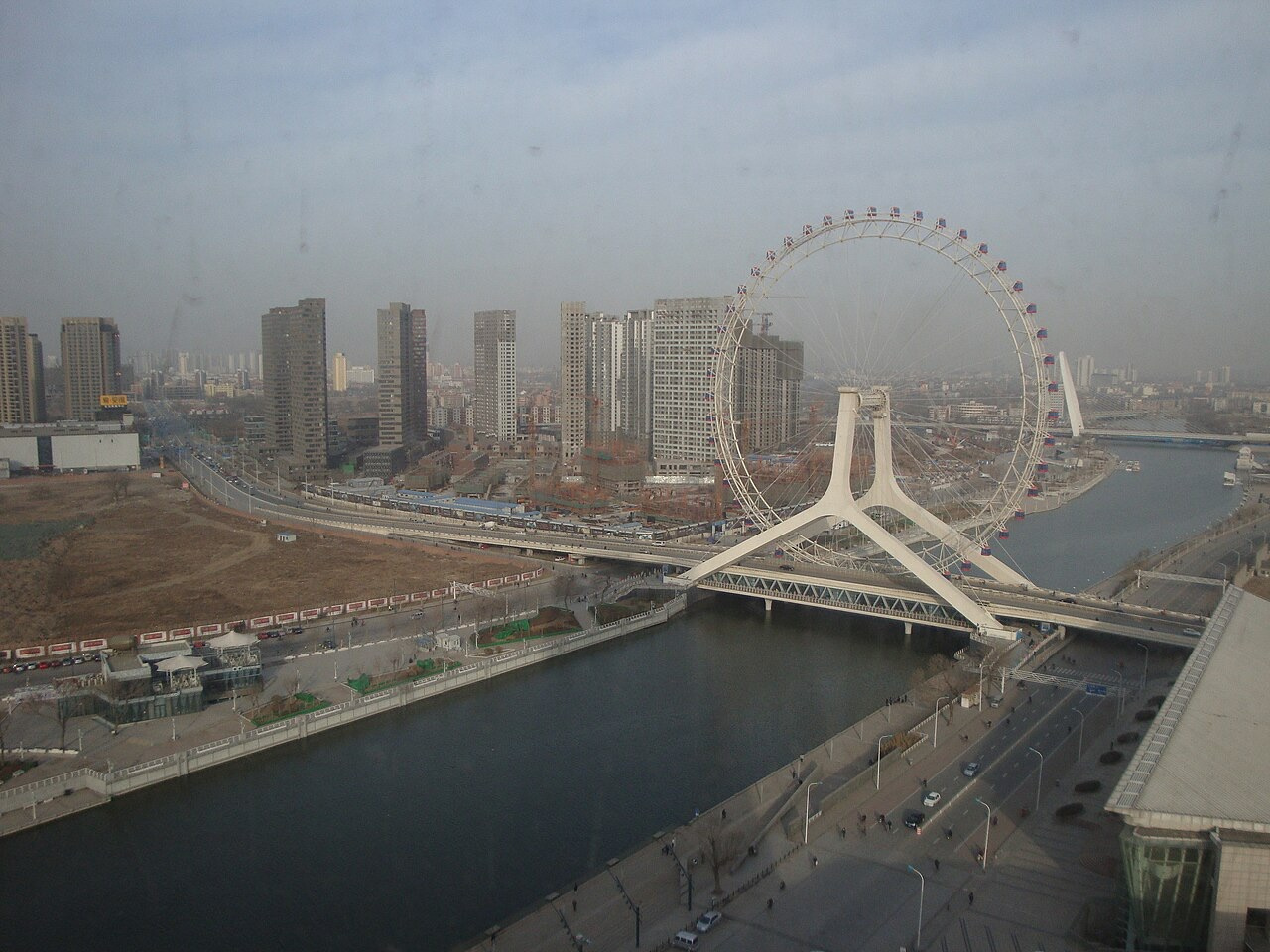
Occhio di Tianjin
Ruota panoramica costruita sopra un ponte sul fiume Hai; il momento migliore è il crepuscolo.
≈ 1 h
Casa di porcellana
Dimora in stile francese rivestita di frammenti di porcellana.
≈ 1 h
Lungofiume e crociera sul fiume Hai
Gite serali in barca davanti ai ponti illuminati.
≈ 1.5 h
Biblioteca di Tianjin Binhai
Sala di lettura futuristica “Occhio di Binhai”, nella nuova area di Binhai, a circa 45 km dal centro; chiusa il lunedì.
≈ 2 h