Peking
BeijingChinas medizinische Hauptstadt: Krankenhäuser auf nationalem Spitzenniveau mit seit Langem etablierten internationalen Abteilungen.
Airports: Beijing Capital International Airport (PEK) · Beijing Daxing International Airport (PKX)
Best months to visit: Apr · May · Sep · Oct
Zuletzt aktualisiert:
Key facts
Hospitals and clinics listed for Peking in the CareAtlas directory: 18. Main airports: Beijing Capital International Airport (PEK) · Beijing Daxing International Airport (PKX). Best months to visit: Apr · May · Sep · Oct.
- Province: Beijing
- Airports: Beijing Capital International Airport (PEK) · Beijing Daxing International Airport (PKX)
- Best months to visit: Apr · May · Sep · Oct
- Hospitals listed: 18
- Treatments at listed hospitals: Zahnimplantate, Zahnkronen und Veneers, Zahnkontrolle und professionelle Zahnreinigung, Wurzelkanalbehandlung, Kieferorthopädie (Zahnspangen und Aligner) … +10
- Last updated:
Veröffentlicht von CareAtlas · Redaktionelle Richtlinien
Beijing is the most common starting point for international patients in mainland China, and for a simple reason: the capital concentrates the country's flagship public hospitals, its longest-running hospital international departments, and two intercontinental airports that both sit on the 240-hour visa-free transit list[2]. If your condition needs a top-tier teaching hospital, a second opinion from a national referral centre, or simply the widest choice of English-capable services, Beijing is usually the first city to shortlist.
Beijing's medical landscape
Beijing is home to many of China's best-known public teaching hospitals, and the city government maintains an English-language list of major institutions that serve foreigners — it currently includes the international departments or international medical centres of Peking Union Medical College Hospital, the China-Japan Friendship Hospital, Beijing Friendship Hospital, Beijing Tiantan Hospital (known for neurology and neurosurgery), Fuwai Hospital (cardiovascular), Peking University Third Hospital, Xuanwu Hospital and others, alongside private hospitals such as Beijing United Family Hospital and Sanfine International Hospital[3]. That list is a useful sanity check: if a facility appears on it, the city itself presents it as an option for international patients.
A few patterns help you read this landscape:
- Public "international departments" (国际医疗部) are premium wings inside large public hospitals. You see the same senior specialists who work in the main hospital, with English-speaking coordination, calmer waiting areas and higher (self-pay or private-insurance) prices. The International Medical Services (IMS) of Peking Union Medical College Hospital (PUMCH) — the best-known example — runs weekday clinics from 8am to 5pm, evening and weekend clinics, and 24-hour emergency service, with online and app-based booking in English[4]. Its Dongdan campus is at No.1 Shuaifuyuan, Wangfujing, in Dongcheng District[4].
- The China-Japan Friendship Hospital's international department in Chaoyang District lists services in English and Japanese and takes phone bookings on dedicated lines[5].
- Private international hospitals such as Beijing United Family Hospital are built around foreign patients end-to-end — multilingual front desk, direct insurance billing — at prices well above public international departments[3].
Which type suits you depends on the problem. Complex diagnoses and major surgery usually argue for a public flagship's international wing; routine checkups, dental work or family medicine are often smoother in a private setting. Our guide to how international departments work covers the differences in detail, and you can compare verified facilities in the Beijing hospital directory.
What Beijing is known for medically is breadth at the top end: the national referral hospitals for difficult internal-medicine cases, neurology and neurosurgery, cardiology and oncology sit here, along with strong university dental and ophthalmology services and well-established health-checkup programmes. For many treatments you will also find the same service in other cities at lower cost — worth checking via the treatment pages before you default to the capital.
Getting there
Beijing has two long-haul airports: Beijing Capital International Airport (PEK), northeast of the city, and Beijing Daxing International Airport (PKX), about 50 km south of the centre. Both are designated entry ports for China's 240-hour visa-free transit policy, and the permitted stay area is the whole Beijing municipality[2].
As of October 2026, that policy lets nationals of 57 countries — including the US, UK, most of Europe, Russia, Canada, Australia, Japan and South Korea — enter without a visa for up to 10 days when transiting to a third country or region, holding an onward ticket with a confirmed seat[1]. Permitted activities include travel, business and family visits; work and study still require visas[1]. A 10-day window can cover a consultation-plus-checkup trip, but for treatment-focused travel (or anything that might run long) a regular visa is the safer route — see the visa and entry guide.
Both airports connect to the centre by express rail and metro; allow a full hour door-to-door from either, more at rush hour. Beijing is also the hub of the national high-speed rail network, so combining a Beijing consultation with care or recovery in another city — Tianjin is about half an hour away by intercity train — is realistic.
Where to stay
Match your hotel to your hospital's district, not to the tourist centre:
- Dongcheng / Wangfujing puts you within walking distance or a short taxi of PUMCH's Dongdan campus[4], with the Forbidden City and major sights nearby — convenient when companions want to sightsee between appointments.
- Chaoyang suits the China-Japan Friendship Hospital[5] and most private international hospitals and clinics; it is also the embassy district, useful if you need consular paperwork.
- Haidian (northwest) is closest to the Peking University hospital cluster.
Beijing is huge and traffic is slow; a hotel 5 km from the hospital on the same metro line beats a nicer one across town. Chain hotels near major hospitals are used to medical visitors, and front desks register foreign guests' passports at check-in as part of the standard process. More strategies in accommodation near hospitals.
Combining treatment with sightseeing
Beijing rewards slow tourism, which fits medical pacing well. Flat, unhurried options — the Temple of Heaven park, Shichahai lakes, 798 Art District — work in the days around appointments; save the Great Wall (steep, 1.5–2 hours each way) for before a procedure or well after recovery, not the day after one.
Example: arrive Saturday, acclimatise with a short walk around Shichahai on Sunday, hospital consultation and tests Monday, results and treatment plan Wednesday, Mutianyu Great Wall trip Thursday if your doctor agrees, fly out at the weekend. This is an illustration, not a prescription — build your own around the treatment-and-travel guide and ask your doctor what activity is safe for your case (recovery-friendly activities).
Climate and best season
Beijing has four sharp seasons. April–May and September–October are the sweet spots: mild, mostly dry, good walking weather. July–August is hot (often above 30 °C) with occasional heavy rain; December–February is cold (frequently below freezing) and very dry but bright. None of this blocks a medical trip — hospitals are heated and air-conditioned — it mainly affects the comfort of companions and your recovery walks. If your dates are flexible, aim for the shoulder seasons; they are also pleasant for the parks and courtyards you will actually have energy for.
Practical tips
- Payments: mobile payment dominates; international cards link to Alipay and WeChat Pay, and hospital international departments typically also take cards. Carry some cash as backup. Details in the payments guide.
- Getting around: the metro is extensive, cheap and signed in English; taxis and DiDi are plentiful. Keep your hospital's name in Chinese characters on your phone to show drivers (getting around).
- Language: outside international departments, assume limited English. A medical interpreter is worth it for complex consultations — see language and interpreters. The bilingual inquiry letter tool helps you contact hospitals before you fly.
- Connectivity: install a translation app, a map app that works in China and your VPN arrangements before departure (apps and connectivity).
Limits to plan around
Be realistic about what a Beijing trip can and cannot do. Flagship hospitals are busy, and even international departments may need days between consultation, tests and a treatment decision — do not book a 3-day trip for a complex problem. Follow-up care happens after you fly home, so plan who will manage it there and how you will get your records (medical records and follow-up). If a complication would be dangerous to manage far from home — or your doctor at home advises against travel — treating locally may be the better decision. Prices in Beijing's international wings are also typically the highest in the country for comparable care; smaller cities can be significantly cheaper for routine treatments.
Next steps
Browse verified hospitals with international services in the Beijing directory, use the inquiry letter tool to contact an international department in English and Chinese, or let the CareAtlas planner draft a treatment-plus-travel itinerary around your dates and condition.
Häufig gestellte Fragen
Do Beijing's big public hospitals treat foreign patients?
Many do, through dedicated international departments. The Beijing city government publishes an English list of major institutions with international medical services, including Peking Union Medical College Hospital and the China-Japan Friendship Hospital.
Can I visit Beijing for treatment without a Chinese visa?
Possibly. Nationals of 57 countries transiting to a third country can enter via Beijing Capital or Daxing airports and stay in the municipality up to 10 days under the 240-hour visa-free transit policy, as of October 2026. A visa is safer for longer or treatment-focused trips.
Where should I stay for hospital visits in Beijing?
Pick a hotel in the same district as your hospital and near a metro line. Dongcheng suits PUMCH's Dongdan campus; Chaoyang suits the China-Japan Friendship Hospital and most private international hospitals.
When is the best time of year to come?
April–May and September–October bring mild, mostly dry weather. Winters are cold and dry, summers hot with occasional downpours; both are workable for indoor-focused medical trips.
Do Beijing hospitals speak English?
International departments generally offer service in English, and some list other languages — the China-Japan Friendship Hospital's international department lists English and Japanese. Always confirm language support when booking, and consider an interpreter for complex consultations.
Quellenverzeichnis (5)
- [1]Visa-Free Transit Policies — National Immigration Administration (abgerufen am 2026-10-12)↩
- [2]China's 24-hour & 240-hour visa-free transit policy (port and stay-area table, source: NIA) — Hainan Provincial Government (abgerufen am 2026-10-12)↩
- [3]Major Medical Institutions (Medical Guide for expats) — Beijing Municipal Government (abgerufen am 2026-10-12)↩
- [4]Medical care for foreigners — International Medical Services (IMS) — Peking Union Medical College Hospital (abgerufen am 2026-10-12)↩
- [5]International Department of China-Japan Friendship Hospital — Beijing Municipal Government (abgerufen am 2026-10-12)↩
Worth seeing
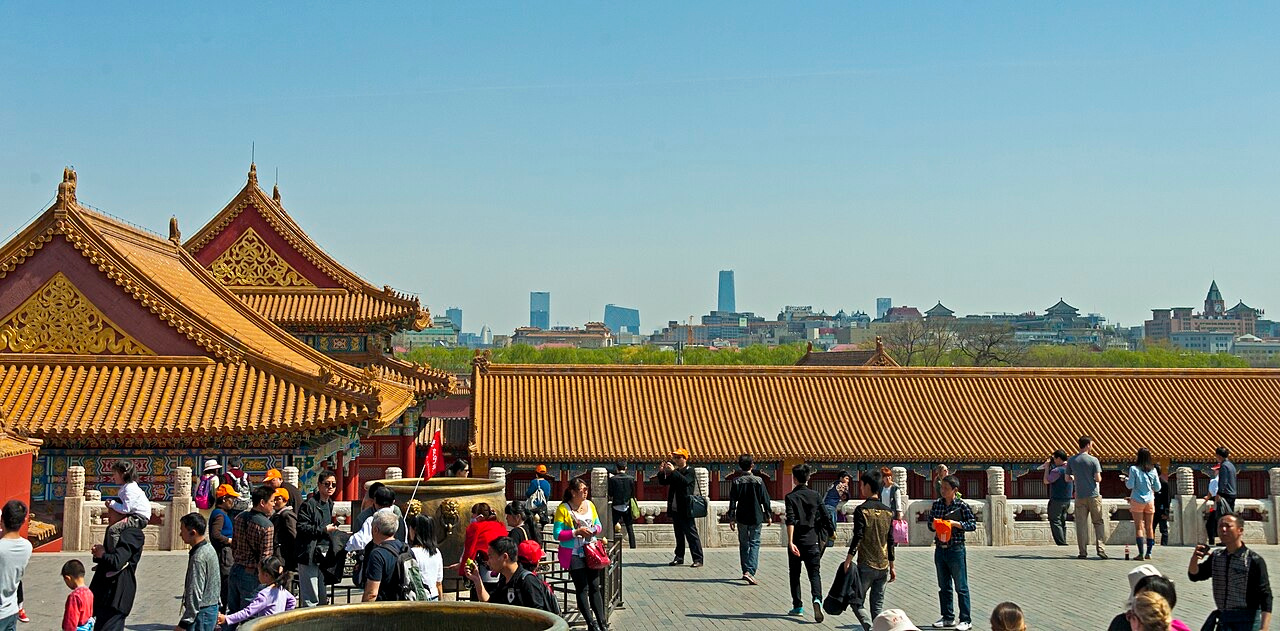
Verbotene Stadt (Palastmuseum)
Kaiserpalast aus der Ming- und Qing-Zeit; reservieren Sie rechtzeitig mit Ihrem Reisepass; montags geschlossen.
≈ 4 h
Himmelstempel
Kaiserlicher Opferaltar in einer weitläufigen Parkanlage; morgens finden Tai-Chi und Tanz statt.
≈ 2 h
Chinesische Mauer bei Mutianyu
Restaurierter Abschnitt mit Seilbahn und meist weniger Andrang; Tagesausflug etwa 70 km vom Stadtzentrum.
≈ 6 h
Sommerpalast
Kaiserliche Gärten am See; die ebenen Uferwege eignen sich für gemütliche Spaziergänge.
≈ 3 h
Lamatempel (Yonghegong)
Aktiver tibetisch-buddhistischer Tempel im Stadtzentrum.
≈ 1.5 h
Seen von Shichahai und Hutongs
Gassen mit traditionellen Innenhöfen und Seen; gut für Spaziergänge und Rikschafahrten.
≈ 2 h
Kunstviertel 798
Galerien und Cafés auf einem ehemaligen Fabrikgelände; viele Galerien sind montags geschlossen.
≈ 3 h
Nationalmuseum China
Kostenloser Eintritt nach vorheriger Reservierung mit Reisepass; montags geschlossen.
≈ 3 h