Harbin
HeilongjiangOrașul festivalului de gheață, cu spitale universitare și legături medicale solide cu Rusia.
Airports: Harbin Taiping International Airport (HRB)
Best months to visit: Jan · Feb · Jun · Jul · Aug · Dec
Ultima actualizare:
Key facts
Hospitals and clinics listed for Harbin (Heilongjiang) in the CareAtlas directory: 4. Main airports: Harbin Taiping International Airport (HRB). Best months to visit: Jan · Feb · Jun · Jul · Aug · Dec.
- Province: Heilongjiang
- Airports: Harbin Taiping International Airport (HRB)
- Best months to visit: Jan · Feb · Jun · Jul · Aug · Dec
- Hospitals listed: 4
- Treatments at listed hospitals: Terapii de medicină tradițională chineză, Reabilitare (după accident vascular cerebral și ortopedică)
- Last updated:
Publicat de CareAtlas · Politică editorială
Harbin, capital of China's northernmost province Heilongjiang, is best known abroad for its winter ice festival — but it is also a medical-university city with a cluster of large teaching hospitals, strong traditional Chinese medicine institutions, and the deepest Russia-facing medical ties of any major Chinese city. For most international patients it is a regional option rather than a national one; for Russian-speaking patients and visitors from Northeast Asia, it can be the most practical big city in China.
Harbin's medical landscape
Harbin's public system is organised around Harbin Medical University (HMU) and its affiliated hospitals. The official English hospital directory for Harbin lists the First, Second and Fourth Affiliated Hospitals of HMU, the Harbin Medical University Cancer Hospital, Heilongjiang Provincial Hospital, and the First and Second Affiliated Hospitals of Heilongjiang University of Chinese Medicine, with addresses and switchboards[3]. Most of the big university hospitals cluster in Nangang District near the city centre[3].
Two things stand out for international planning:
- Traditional Chinese medicine. With two university TCM hospitals on the official list[3], Harbin is a serious option for TCM therapies — acupuncture, tuina and herbal programmes that pair naturally with a slower-paced trip. See the TCM specialty page.
- Russia-facing medicine. HMU co-founded the China-Russia Medical University Alliance together with Moscow's Sechenov First State Medical University; the alliance now spans 140 universities and is described as the largest university cooperation framework between the two countries, marking its 12th year in 2026[6]. This is academic cooperation, not a patient-services guarantee — but it signals where the institutional relationships run.
Unlike Beijing or Shanghai, we did not find official English pages describing dedicated international patient departments at Harbin's major hospitals; published contacts are switchboards[3]. Treat that as a real gap: contact hospitals in advance (the bilingual inquiry tool helps), confirm language support and prices in writing, and compare what is verified in the Harbin hospital directory.
Getting there
Harbin Taiping International Airport (HRB) is the gateway, about 35 km southwest of the centre, with dense domestic connections and regional international routes. It is a designated port for the 240-hour visa-free transit policy — but note the important restriction: for entries at Harbin, the permitted stay area is Harbin city only[2]. The scheme covers nationals of 57 countries transiting to a third country, for up to 10 days with a confirmed onward ticket; work and study remain off-limits[1].
For Russian citizens there is a simpler route: China introduced 30-day visa-free entry for holders of ordinary Russian passports on a trial basis from September 15, 2025, covering business, tourism, family visits and transit[4], and announced in May 2026 that the arrangement runs through December 31, 2027[5]. As of October 2026 this makes Harbin one of the easiest major Chinese cities for Russians to reach without paperwork — check current conditions before booking, as entry policies change (visa and entry guide).
Harbin is also on the high-speed rail network, with fast trains south to Dalian and the rest of Northeast China.
Where to stay
The practical choice is Nangang District, where the HMU hospital cluster sits[3] — hotels around Hongbo Square and the railway station put most big hospitals within a short taxi ride. For a more atmospheric base, Daoli District around Central Street and the Saint Sophia Cathedral offers the city's best walking, cafés and river access, still within 15–20 minutes of the Nangang hospitals by taxi. In deep winter, prioritise distance over charm: −20 °C makes every extra outdoor minute count. General advice in accommodation near hospitals.
Relevance for Russian-speaking visitors
Sticking to what is documented:
- Russian citizens currently enjoy 30-day visa-free entry to China, through the end of 2027[4][5].
- HMU anchors the China-Russia Medical University Alliance — 140 member universities, co-founded in Harbin, with regular academic exchange between the two countries' medical schools[6].
- Heilongjiang's border hospitals report a growing flow of Russian patients, particularly for TCM; one border-city hospital described setting up an international department, training staff in Russian and hiring professional translators to serve them[7]. That trend is strongest in border cities like Heihe, but it reflects the province-wide orientation.
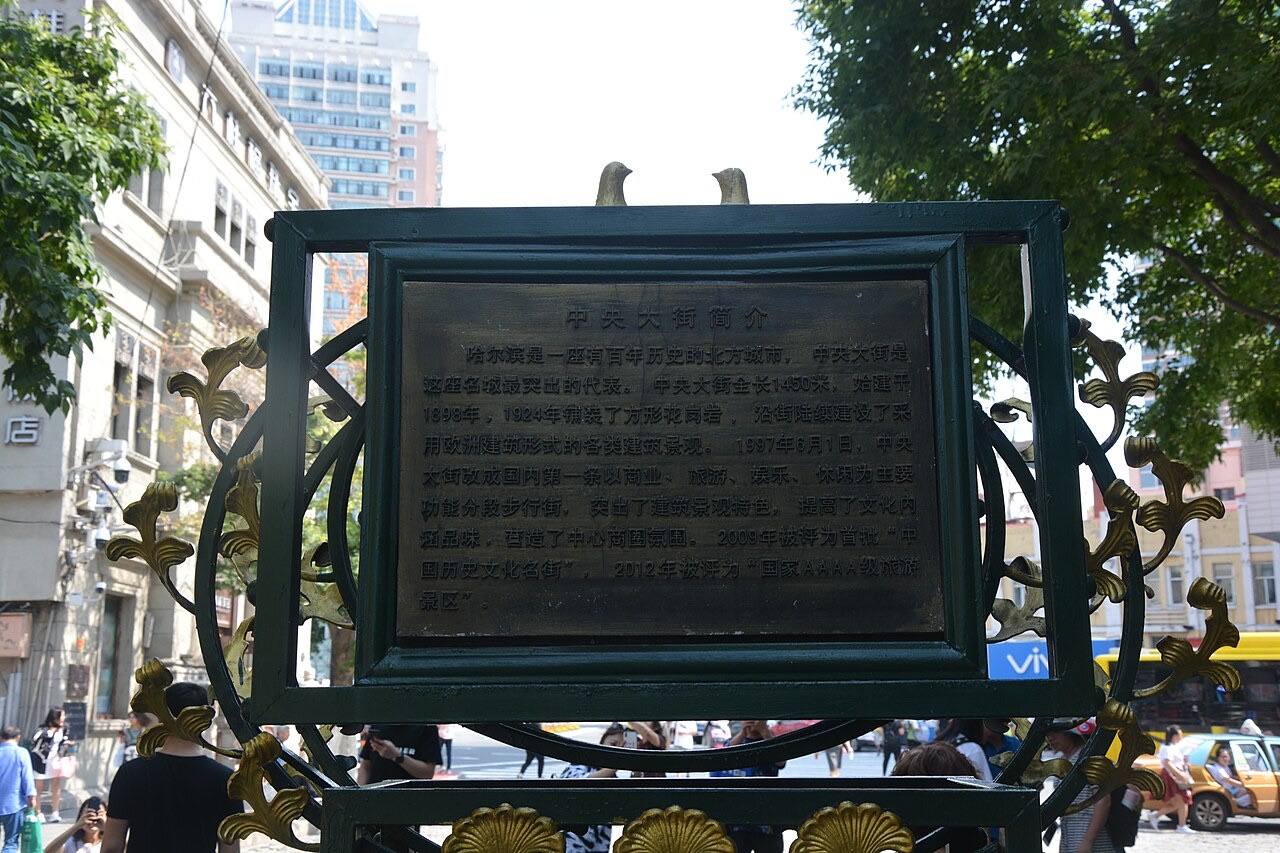
- Harbin's Russian heritage — Central Street's architecture, the Saint Sophia Cathedral — makes the city culturally legible for Russian-speaking companions.
What we could not verify: Russian-language service desks or published Russian-speaking staff at Harbin's major hospitals. If Russian-language care is essential, ask the hospital directly before travelling, or budget for an interpreter (language and interpreters).
Combining treatment with sightseeing
In summer, Harbin is an easy, green city: Central Street, the Songhua riverbank and Sun Island are flat, unhurried territory that fits recovery pacing well. In winter, the calculus changes: the Ice and Snow World and the snow expo are spectacular but mean hours outdoors at around −20 °C on slippery ground — fine before treatment or for companions, risky straight after a procedure. Ask your care team what cold exposure and walking distance are safe (recovery-friendly activities), and plan indoor fallbacks (the architecture museum in the cathedral, teahouses, galleries). More planning patterns in combining treatment and travel.
Climate and best season
Harbin is one of China's coldest major cities. June–August is the comfortable season — warm days, cool evenings, the river in full use. September–October is crisp and short. From December to February the city lives its famous winter: reliably sub-zero, often around −20 °C, with the ice festival running roughly from late December into February. For a treatment-first trip, summer is the sensible default; the winter spectacle is better treated as a separate, healthy-traveller holiday.
Practical tips
- Dress for the season seriously. Winter requires real insulation (layers, windproof outer shell, insulated boots); pharmacies and malls sell what you forgot.
- Payments: Alipay/WeChat Pay with an international card linked works citywide; keep cash as backup (payments guide).
- Getting around: metro lines plus cheap taxis; distances between districts are short compared with Beijing (getting around).
- Language: assume Chinese-only service in most settings; English is thinner on the ground than in first-tier cities, and Russian signage in tourist areas does not mean Russian-speaking hospitals.
Limits to plan around
Harbin is not a national referral hub: for rare or highly complex conditions, Beijing's flagship hospitals remain the usual destination (Beijing guide), and the transit-policy restriction to Harbin city[2] means you cannot hop to another province on a visa-free transit entry made here. Winter travel adds genuine physical risk for recovering patients. And the absence of published international departments means more legwork before you fly — written confirmation of services, prices and language support matters more here, not less.
Next steps
Check verified facilities in the Harbin hospital directory, send a bilingual first inquiry with the inquiry letter tool, or let the CareAtlas planner build a season-appropriate treatment-and-travel plan.
Întrebări frecvente
Which are Harbin's main hospitals?
The affiliated hospitals of Harbin Medical University (including its cancer hospital), Heilongjiang Provincial Hospital, and the affiliated hospitals of Heilongjiang University of Chinese Medicine are the major institutions listed in the official English hospital directory for Harbin.
Can I enter Harbin without a Chinese visa?
Two routes exist as of October 2026: the 240-hour visa-free transit via Harbin Taiping Airport (stay limited to Harbin city, 10 days, 57 eligible nationalities), and for Russian citizens, 30-day visa-free entry under the China-Russia arrangement extended through 2027.
Is Harbin relevant for Russian-speaking patients?
Harbin Medical University co-founded the China-Russia Medical University Alliance, and Heilongjiang's border hospitals report growing Russian patient flows. However, we found no official pages confirming Russian-language service desks at Harbin's major hospitals — confirm language support before travelling.
When should I visit Harbin?
For comfort, June–August is mild and green. The famous ice festival runs roughly from late December to February, but expect temperatures around −20 °C — hard going straight after a medical procedure.
Can I combine the ice festival with treatment?
Only with care. Extreme cold, slippery surfaces and long outdoor evenings suit healthy companions better than recovering patients. Ask your doctor what exposure is safe, and keep indoor alternatives ready.
Referințe (7)
- [1]Visa-Free Transit Policies — National Immigration Administration (accesat 2026-10-12)↩
- [2]China's 24-hour & 240-hour visa-free transit policy (port and stay-area table, source: NIA) — Hainan Provincial Government (accesat 2026-10-12)↩
- [3]Hospitals in Harbin — China Daily — government services portal (accesat 2026-10-12)↩
- [4]China to Trial a 30-Day Visa-free Policy for Russian Citizens — Beijing Municipal Government (CGTN) (accesat 2026-10-12)↩
- [5]China extends visa-free entry for Russians through end of 2027 — Meduza (accesat 2026-10-12)↩
- [6]中俄医科大学联盟成立十二载 中俄四对高校在沪签约 — China News Service (accesat 2026-10-12)↩
- [7]Chinese hospitals bordering Russia see influx of people seeking TCM — China Daily (accesat 2026-10-12)↩
Worth seeing
Catedrala Sfânta Sofia
Fostă biserică ortodoxă rusă, astăzi reper arhitectural și fotografic într-o piață cu cafenele.
≈ 1 h
Strada Centrală (Zhongyang Dajie)
Stradă pietonală pavată, cu clădiri din perioada rusă; încercați înghețata marca Modern chiar și iarna.
≈ 2 h
Lumea Gheții și Zăpezii din Harbin
Parc întins cu sculpturi de gheață iluminate, deschis numai iarna (aproximativ de la sfârșitul lui decembrie până în februarie); mergeți după lăsarea întunericului și îmbrăcați-vă pentru −20 °C.
≈ 4 h
Insula Soarelui
Parc pe malul opus al râului Songhua; găzduiește expoziția de sculpturi în zăpadă iarna și spații verzi pe mal vara.
≈ 3 h
Malul râului Songhua și Parcul Stalin
Promenadă de vară; în plină iarnă, râul înghețat se umple de tobogane de gheață și sănii.
≈ 1.5 h
Marele Teatru Harbin
Operă cu aspect sculptural pe malul râului; aleile exterioare sunt deschise vizitatorilor.
≈ 1 h
Parcul Tigrului Siberian
Rezervație mare de reproducere a tigrilor Amur, la nord de râu.
≈ 2 h
Domeniul Volga
Domeniu-parc în stil rusesc, la marginea orașului, cu biserici de lemn reconstruite; excursie de o jumătate de zi.
≈ 4 h