쿤밍
Yunnan해발 1,900m의 ‘봄의 도시’로, 연중 온화한 날씨와 윈난성 대표 성립병원이 있습니다.
Airports: Kunming Changshui International Airport (KMG)
Best months to visit: Mar · Apr · May · Oct · Nov
최종 업데이트:
Key facts
Hospitals and clinics listed for 쿤밍 (Yunnan) in the CareAtlas directory: 2. Main airports: Kunming Changshui International Airport (KMG). Best months to visit: Mar · Apr · May · Oct · Nov.
- Province: Yunnan
- Airports: Kunming Changshui International Airport (KMG)
- Best months to visit: Mar · Apr · May · Oct · Nov
- Hospitals listed: 2
- Last updated:
게시자: CareAtlas · 편집 정책
Kunming, capital of Yunnan Province, is the gentlest-climate option among China's major medical destinations: the "Spring City" averages around 15 °C across the year[2], its airport is a 240-hour visa-free transit port[1], and its flagship provincial hospital publishes English-language information for international patients[3]. One thing sets it apart from every other city in this guide, and your doctor should hear about it before you book: Kunming's downtown sits at 1,891 m above sea level[2].
The medical landscape
Kunming is the referral center for a province of 47 million and a stated medical gateway toward South and Southeast Asia. The institution to know is The First People's Hospital of Yunnan Province (云南省第一人民医院), known locally as Kunhua Hospital (昆华医院), in central Kunming. Its official English pages describe 3,570 open beds, more than two million outpatient and inpatient services a year, 1,483 staff holding master's or doctoral degrees, and a role as medical technology training base for South and Southeast Asia; the hospital also hosts Yunnan's only National Emergency Medical Rescue Team and reports the first photon-counting CT scanner in the Yunnan–Guizhou region[3].
A provincial flagship with an English international-services page is a solid starting point, but the usual cautions apply: published English information does not guarantee English-speaking clinicians in your specific specialty, and complex cases are sometimes referred onward to Chengdu, Guangzhou or Shanghai. Confirm your condition, proposed doctor and language support in writing before you fly — use the bilingual inquiry letter tool — and compare sourced entries in the Kunming hospital directory. Context reading: international departments explained and choosing a hospital.
Getting there
Kunming Changshui International Airport (KMG) is southwest China's main hub toward South and Southeast Asia, with a metro line into town. It is listed by the National Immigration Administration as an eligible port for the 240-hour visa-free transit policy: as of October 2026 this covers nationals of 57 countries transiting onward to a third country or region, who may stay up to 10 days within nine permitted Yunnan cities and autonomous prefectures — including Kunming, Dali, Lijiang and Xishuangbanna[1]. Kunming's flight geography makes the "genuine transit" condition unusually easy to satisfy: many itineraries continue naturally to Bangkok, Singapore, Vientiane or Hanoi. Longer treatment stays need a visa — see visa and entry.
Overland, Kunming is the Chinese terminus of the China–Laos Railway and has high-speed rail links across the country.
Where to stay
- City center, near Kunhua Hospital. The First People's Hospital sits by the Jinma Biji archway area in the walkable heart of Kunming[3] — hotels of every class, pharmacies and malls are minutes away. This is the default choice for patients.
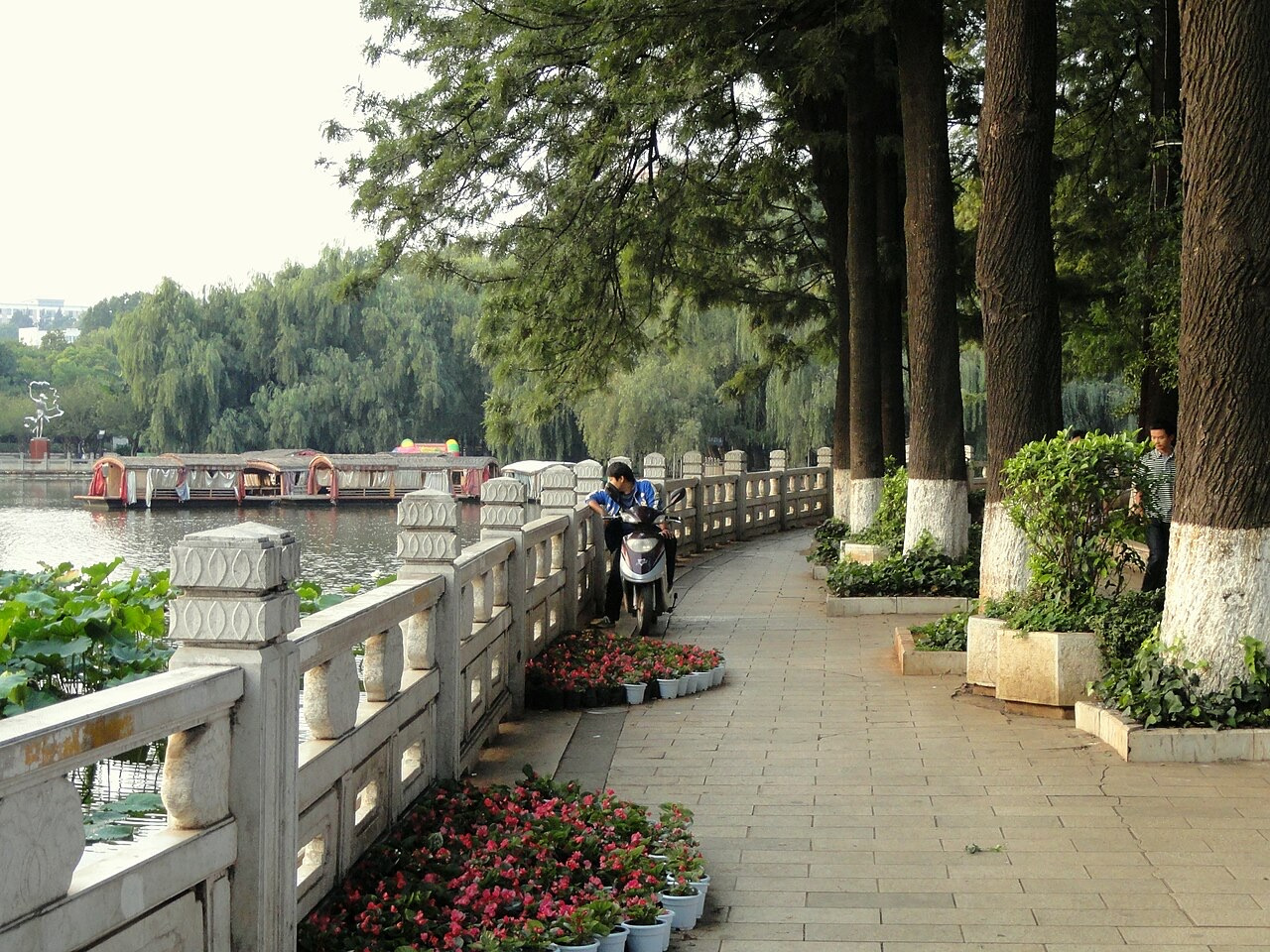
- Green Lake (Cuihu) area. Leafy, calm, next to the city's loveliest park — the best convalescence setting in town, still a short taxi from the hospital.
- Dianchi lakefront. Resort-style hotels with lake views; more space and air, but 30+ minutes from central hospitals.
Kunming is flatter and calmer than Chongqing and cheaper than coastal metropolises, so long stays strain budgets less. Practical tactics in accommodation near hospitals and traveling with companions.
Combining treatment with sightseeing
Kunming's recovery-friendly outings cluster conveniently by effort level:
- Green Lake Park. Flat lakeside loops, teahouses, and — from roughly November to March — thousands of wintering black-headed gulls. The classic gentle first outing.
- Kunming Old Streets and the flower-and-bird market. Level central wandering in two unhurried hours.
- Yunnan Provincial Museum. Indoor, level, and a good use of an acclimatisation day.
- Dianchi Lake and Haigeng Dam. A flat waterfront promenade; afternoons get windy.
- Western Hills and Dragon Gate grottoes. Cliff-carved paths high above the lake: steps, drops and altitude on top of altitude. Use the cable car, and keep this for late in your stay — or for companions.
- Stone Forest (Shilin), once cleared. The UNESCO-listed stone forests of Shilin, part of the South China Karst and considered the world reference for pinnacle karst[4], lie about 90 km away. Paths mix flat central loops with narrow stairs between limestone pinnacles; stick to the main circuits and allow a full day.
Eligible transit-policy visitors may also travel within the permitted Yunnan areas to Dali or Lijiang[1] — but note that Lijiang (around 2,400 m) and onward points toward Shangri-La are higher than Kunming, which compounds the altitude question below. Pace everything against recovery and travel activities.
Climate and altitude — the honest briefing
The climate case for Kunming is real: the municipal government describes a low-latitude plateau monsoon climate with long sunshine, short frost periods and a roughly 15 °C annual average — spring-like all year, hence "Spring City"[2]. For convalescents that means no heat-stress summers and no icy winters; the main caveats are a rainy season concentrated in June–September, strong high-altitude sunshine (bring sunscreen), and chilly evenings whenever the sun drops.
The altitude deserves equal honesty. At 1,891 m[2], Kunming is moderate altitude — below the threshold where altitude sickness is common, and most healthy visitors feel at most mild breathlessness on stairs for a day or two. But oxygen partial pressure is meaningfully lower than at sea level. Raise it with your doctor if you have cardiac or pulmonary disease, significant anaemia, or are planning/recovering from surgery — and ask specifically whether moderate altitude changes your risk, your medication, or your flying schedule. If your condition is altitude-sensitive, a sea-level city such as Shanghai or Guangzhou may simply be the safer choice. This is a question for your clinicians, not a reason to self-exclude.
Practical tips
- Payments. Alipay/WeChat Pay everywhere; link a foreign card before arrival. See payments.
- Language. Outside the provincial flagship's international services[3], expect Mandarin (and local dialects); arrange interpreters for consultations — see language and interpreters.
- Sun and dryness. High-altitude UV is strong year-round; hydrate more than you think you need, especially post-operatively.
- Getting around. Metro plus cheap taxis cover patient needs; see getting around.
- Emergencies. Ambulance: 120; keep a bilingual condition summary handy. See emergency in China.
Limits to plan around
Kunming's specialist depth, while strong for the region, is thinner than Beijing–Shanghai–Guangzhou for rare conditions — ask directly whether your case would be referred elsewhere. English-language service is improving but not universal. The altitude, mild as it is, is a genuine medical variable that belongs in your pre-trip consultation. And as with all medical travel, staged procedures need staged trips, and complication handling after you fly home must be agreed in advance — see risks and complications.
Next steps
Start with the Kunming hospital directory, send a structured inquiry via the bilingual letter tool, and let the CareAtlas planner build an acclimatisation-aware day plan around your appointments. Broader context: combining treatment and travel and how it works.
자주 묻는 질문
Which Kunming hospital should international patients contact first?
The First People's Hospital of Yunnan Province (Kunhua Hospital) publishes an English international medical services page and is the province's flagship public hospital. Compare sourced options in our directory.
How high is Kunming, and does it matter medically?
Downtown Kunming sits at 1,891 m. Most visitors notice little, but patients with cardiac, pulmonary or severe anaemia issues — and anyone fresh from surgery — should ask their doctor whether moderate altitude affects their case.
Can I enter Kunming without a visa for a short trip?
Kunming Changshui International Airport is an eligible 240-hour visa-free transit port. As of October 2026, nationals of 57 countries transiting to a third country or region may stay up to 10 days in nine permitted Yunnan cities and prefectures, including Dali and Lijiang.
Why do people recommend Kunming's climate for recovery?
The city is called the Spring City: its official profile cites a ~15 °C annual average with mild weather year-round, so convalescents avoid both the heat stress of southern summers and harsh northern winters.
Is the Stone Forest doable while recovering?
It is a day trip about 90 km away with stone paths, steps and uneven ground. Treat it as a late-recovery outing and stick to the flat central loops; confirm with your doctor first.
참고 자료 (4)
- [1]Visa-Free Transit Policies — National Immigration Administration (열람일 2026-10-12)↩
- [2]Overview of Kunming — Kunming Municipal Government (열람일 2026-10-12)↩
- [3]International Medical Services - The First People's Hospital of Yunnan Province — The First People's Hospital of Yunnan Province (열람일 2026-10-12)↩
- [4]South China Karst — UNESCO World Heritage Centre (열람일 2026-10-12)↩
Worth seeing
취호 공원(녹색 호수 공원)
호숫가에 평탄한 순환 산책로와 찻집이 있습니다. 대략 11월부터 3월까지 겨울을 나는 갈매기 수천 마리가 찾아옵니다.
≈ 2 h
쿤밍 옛거리와 꽃·새 시장
옛 골목과 시장 노점을 평탄한 길로 서두르지 않고 두 시간 정도 둘러볼 수 있습니다.
≈ 2 h
윈난성 박물관
실내에 있고 평탄하게 관람할 수 있어 고도 적응일에 방문하기 좋습니다.
≈ 3 h
뎬츠호와 하이겅 제방
호숫가 평탄한 산책로이며 오후에는 바람이 많이 붑니다.
≈ 2 h
서산과 용문 석굴
호수 위 높은 절벽을 깎아 만든 길로 계단, 낭떠러지, 추가 고도가 있습니다. 케이블카를 이용하고 체류 후반에 방문하세요.
≈ 4 h
석림(스린, 당일 여행)
약 90km 떨어진 유네스코 등재 카르스트 봉우리 지형입니다. 평탄한 주요 순환로를 이용하고 하루를 잡으세요. 의사의 허가를 받은 뒤에만 방문하세요.
≈ 8 h