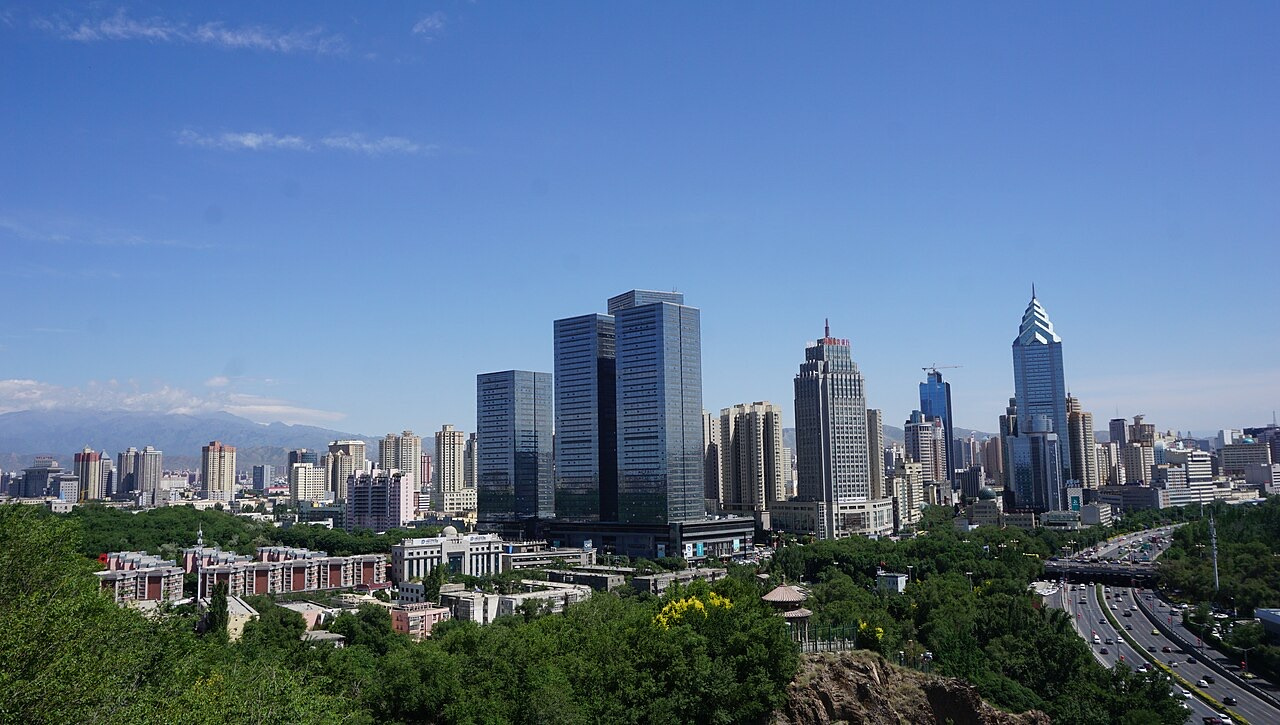
ウルムチ
Xinjiang中国から中央アジアへつながる医療の玄関口。国際診療部門を備えた大規模な大学病院があり、国境を越えた遠隔医療も行われています。
Airports: Urumqi Tianshan International Airport (URC)
Best months to visit: May · Jun · Jul · Aug · Sep
最終更新日:
Key facts
Hospitals and clinics listed for ウルムチ (Xinjiang) in the CareAtlas directory: 4. Main airports: Urumqi Tianshan International Airport (URC). Best months to visit: May · Jun · Jul · Aug · Sep.
- Province: Xinjiang
- Airports: Urumqi Tianshan International Airport (URC)
- Best months to visit: May · Jun · Jul · Aug · Sep
- Hospitals listed: 4
- Treatments at listed hospitals: 中医学療法, がんのセカンドオピニオン・多職種カンファレンス
- Last updated:
公開者:CareAtlas · 編集方針
Urumqi plays a different role in Chinese medical travel than Beijing or Shanghai. The capital of the Xinjiang Uygur Autonomous Region is the biggest city in China's far northwest and the country's medical gateway to Central Asia: official data show that 15 Xinjiang medical institutions have treated more than 5,000 patients from Kazakhstan, Kyrgyzstan and Uzbekistan since 2022[4]. If you live in Central Asia — or can reach Urumqi more easily than an eastern Chinese hub — it deserves a serious look. This guide covers the hospital landscape, the visa rules (which differ from eastern China in an important way), getting in through the new airport, and how to pace recovery in a city of bazaars, mountains and serious winters.
The medical landscape
Xinjiang has been deliberately building itself into an international medical service centre for neighbouring countries since 2015, and had treated more than 25,000 international patients by the end of 2023[6]. The practical result for visiting patients: international medical service departments in five top tertiary hospitals, offering 500 dedicated beds, staffed with foreign-language medical guides and nursing staff, and backed by cross-border telemedicine platforms that connect 22 major hospitals in neighbouring countries[6].
The anchor institution is the First Affiliated Hospital of Xinjiang Medical University (新疆医科大学第一附属医院) at 137 Liyushan South Road. Founded in 1956, it is a comprehensive 3A-grade hospital — China's top public hospital tier — with 2,970 beds and 17 clinical centres[5]. According to the university's president, the hospital has treated a significant number of patients with complex and rare diseases from Central Asian countries in recent years, and runs an international telemedicine consultation centre with hospitals across the region, so that some patients are diagnosed and followed up without crossing the border[7]. In 2023 a multidisciplinary team from the hospital assisted in performing Kazakhstan's first ex-vivo liver resection and autologous liver transplantation[6].
Other hospitals of the same university cover specific niches: the Sixth Affiliated Hospital specialises in orthopedic surgery, and the Fourth Affiliated Hospital — a traditional Chinese medicine-oriented institution — treated over 500 Central Asian patients in a single recent year, helped by the popularity of TCM therapies such as acupuncture and herbal medicine among visitors from Kazakhstan[4]. Xinjiang even markets "TCM health tours" that combine treatment with travel[4].
Two caveats before you anchor plans to any single name. First, "the hospital treats foreign patients" is not the same as "there is a desk that answers emails in your language" — the practical test is whether you get a usable reply to a written inquiry. Draft one with our bilingual inquiry letter tool, and read international departments explained to calibrate expectations. Second, rather than trusting any list of names, use the hospital directory filtered to Urumqi, where every entry carries sourced contact details and service evidence.
Getting there
Urumqi's air gateway was rebuilt in 2025. A new terminal at Urumqi Tianshan International Airport (URC) — formerly Urumqi Diwopu International Airport — began trial operations in April 2025 as part of an expansion that took the airport from one runway to three and lifted capacity to 48 million passengers a year[3]. The airport operates 207 regular domestic routes plus 26 international routes to destinations in Central Asia, Western Asia and Europe[3], which is precisely the point: for patients from Almaty, Tashkent or Bishkek, Urumqi is usually the nearest major Chinese hospital city by a wide margin.
From elsewhere in China, frequent domestic flights connect Urumqi with the major eastern hubs. Rail exists — Urumqi is on the high-speed line towards Lanzhou and the national network — but distances across China's northwest are vast, so almost all medical travellers fly.
Visas: Xinjiang plays by different rules
This is the single most important planning detail. China's 240-hour (10-day) visa-free transit policy does not apply in Xinjiang: the region is not among the 24 provinces and municipalities whose ports and areas are covered, so the scheme that works for Beijing, Shanghai or Chengdu will not get you treatment days in Urumqi — only the universal 24-hour transit rule applies at open ports, and that is for connections, not care[1].
What does work is China's unilateral 30-day visa-free entry, which applies nationwide, Urumqi included. As of October 2026 the National Immigration Administration lists 50 eligible countries — including Russia, the United Kingdom, Canada, Australia, Japan, South Korea and most EU states — whose citizens with ordinary passports may enter visa-free for up to 30 days for tourism, business, family visits or transit[2]. Thirty days fits consultations, imaging, dental work, check-ups and many procedures with initial recovery. Separately, visa-free travel between China and Kazakhstan has been credited with boosting cross-border patient flows[4]. These policies change; verify your nationality's current status before booking, and for longer or staged treatment arrange a visa — see the visa and entry guide.
Where to stay
Urumqi is compact by Chinese megacity standards, and hospital neighbourhoods are well supplied with mid-range hotels:
- Near your hospital. If your treatment centres on the First Affiliated Hospital, look along Liyushan South Road and the surrounding Xinshi district[5]; staying within a short taxi ride removes the main daily friction.
- City centre (around People's Park and Hongshan). More hotel choice, restaurants and walkable parks for companions; most hospitals are 15–30 minutes away by taxi outside rush hour.
- Serviced apartments make sense for multi-week stays or family groups: kitchen, laundry, space.
Book refundable rates until your appointment dates are confirmed, and keep the hospital's name and address in Chinese on your phone for drivers. More tactics in accommodation near hospitals and traveling with companions.
Combining treatment with sightseeing
Urumqi rewards a measured pace. From least to most demanding:
- People's Park and Hongshan Park. Flat-to-gentle city parks for daily recovery walks; Hongshan's small summit pagoda adds a short climb with city views — skip the climb if you are fresh out of surgery.
- Xinjiang Uygur Autonomous Region Museum. Indoor, flat and genuinely world-class on Silk Road archaeology, including the famous ancient desert mummies. An easy half day.
- International Grand Bazaar. Lively halls of dried fruit, instruments, carpets and street food. Flat walking but crowded; go at opening time for calm.
- Heavenly Lake of Tianshan (Tianchi) — only when cleared. The classic day trip, roughly 100 km east: an alpine lake under snow peaks at around 1,900 m altitude, with bus transfers and walking on boardwalks. The altitude, cool air and full-day format make this a late-recovery or companion outing, not a post-op one. Pacing rules by procedure are in recovery and travel activities.
Food is one of Urumqi's pleasures — laghman noodles, pilaf, naan, lamb skewers, halal options everywhere — but it is hearty and meat-rich. After dental or gastrointestinal procedures, ask for soups and soft dishes, and clear dietary limits with your doctor.
Climate, altitude and the clock
Urumqi's climate is sharply continental: summers are warm and dry, winters long and hard, with temperatures far below freezing and icy pavements — a real obstacle to recovery walking and airport transfers. May through September is the comfortable window. The city sits at roughly 800 m elevation, which is a non-issue for most patients; the mountains around it are a different matter, so keep altitude day trips for the end of your stay. One quirk: all of China runs on Beijing time, but Urumqi lies far west of Beijing, so solar time lags about two hours behind the clock — early-morning appointments feel very early, and evenings stay light late in summer. Confirm appointment times in writing.
Practical tips
- Payments. Set up Alipay or WeChat Pay with your foreign card before you fly; see payments in China.
- Language. Mandarin dominates in hospitals; the international medical service departments provide foreign-language medical guides and nursing staff[6], but confirm your specific language (Russian, Kazakh, English) in writing. For consent discussions, arrange interpretation — see language and interpreters.
- Apps and connectivity. Install a translation app, ride-hailing and a VPN if you need home services; see apps and connectivity.
- Getting around. Taxis and ride-hailing are inexpensive and distances modest; expect visible security screening at stations, bazaars and malls, and carry your passport. General tactics in getting around.
- Records. Ask for imaging on disc or cloud link and a stamped report, and negotiate the report language before treatment; see medical records and follow-up.
Limits to plan around
Be honest about what Urumqi is and is not. For patients from Europe, the Americas or Australia, the eastern hubs offer more direct long-haul flights and longer-established English-language international departments; Urumqi's comparative advantage is geography and language reach into Central Asia. Complex treatment often needs staged visits — budget for a return trip or explicit remote follow-up, and ask your hospital whether its cross-border telemedicine arrangements[6][7] can cover your follow-up, rather than assuming they will. If complications arise after you go home, your local health system handles them — agree on a complication plan in advance. And if you are medically fragile, winter travel to Urumqi adds genuine risk: cold, ice and long transfers are a bad combination with convalescence.
Next steps
Shortlist hospitals in the Urumqi directory, send a structured first email with the inquiry letter tool, and if you want a day-by-day treatment-plus-recovery itinerary built around your procedure, try the CareAtlas planner. For the bigger picture, read how medical travel to China works and combining treatment and travel.
よくある質問
Can I enter China through Urumqi without a visa?
The 240-hour visa-free transit programme does not cover Xinjiang, so that route is out. But China's unilateral 30-day visa-free entry — covering 50 countries including Russia, the UK, Canada and most of the EU as of October 2026 — applies nationwide, including Urumqi. Everyone else needs a visa, except for 24-hour airside transit.
Which hospital do international patients usually contact first in Urumqi?
The First Affiliated Hospital of Xinjiang Medical University is the city's best-documented large hospital for foreign patients, with decades of experience treating people from Central Asia. Compare it with other Urumqi hospitals in our directory.
Will hospital staff speak Russian or Kazakh?
Xinjiang has set up international medical service departments in five top tertiary hospitals with foreign-language medical guides and nursing staff. Which languages are actually on duty varies — confirm your language in writing before you book travel.
When is the best season for a medical trip to Urumqi?
May to September. Winters are long and genuinely cold, which complicates travel, recovery walks and day trips; summer is warm, dry and the best time to combine treatment with sightseeing.
Does Urumqi make sense for patients from Europe or the Americas?
Usually less so than Beijing, Shanghai or Guangzhou, which have more long-haul flights and longer-established English-speaking international departments. Urumqi's case is strongest if you live in Central Asia or can reach it easily.
参考資料 (7)
- [1]Visa-Free Transit Policies — National Immigration Administration (閲覧日 2026-10-12)↩
- [2]List of Countries Covered by Unilateral Visa Exemption Policies — National Immigration Administration (閲覧日 2026-10-12)↩
- [3]Update: Airport expansion in Xinjiang boosts high-level opening up — Xinhua (閲覧日 2026-10-12)↩
- [4]Economic Watch: Xinjiang embraces cross-border medical services boom amid closer ties — Xinhua (閲覧日 2026-10-12)↩
- [5]First Affiliated Hospital of Xinjiang Medical University — China Daily (閲覧日 2026-10-12)↩
- [6]How China-Central Asia health cooperation is gaining momentum — CGTN (閲覧日 2026-10-12)↩
- [7]Xinjiang a front-runner in BRI medical cooperation — China Daily Hong Kong (閲覧日 2026-10-12)↩
Worth seeing
国際大バザール
ドライフルーツ、絨毯、楽器、屋台料理が並ぶ活気ある市場です。平坦ですが混雑するため、開店時の訪問がおすすめです。
≈ 3 h
新疆ウイグル自治区博物館
有名な古代砂漠ミイラを含む、世界水準のシルクロード考古資料を展示しています。屋内で平坦に見学でき、月曜休館です。
≈ 3 h
紅山公園
市中心部の丘にある公園で、小さな頂上の塔から市街を望めます。下の散策路は緩やかで、頂上までは短い上り坂です。
≈ 2 h
人民公園
湖畔にある平坦な市民公園で、毎日の回復期の散歩に向いています。
≈ 1.5 h
天山天池
市の東約100km、標高約1,900mにある高山湖への日帰り旅行です。バス移動と木道歩きがあり、回復後半の方や同行者向けです。
≈ 8 h